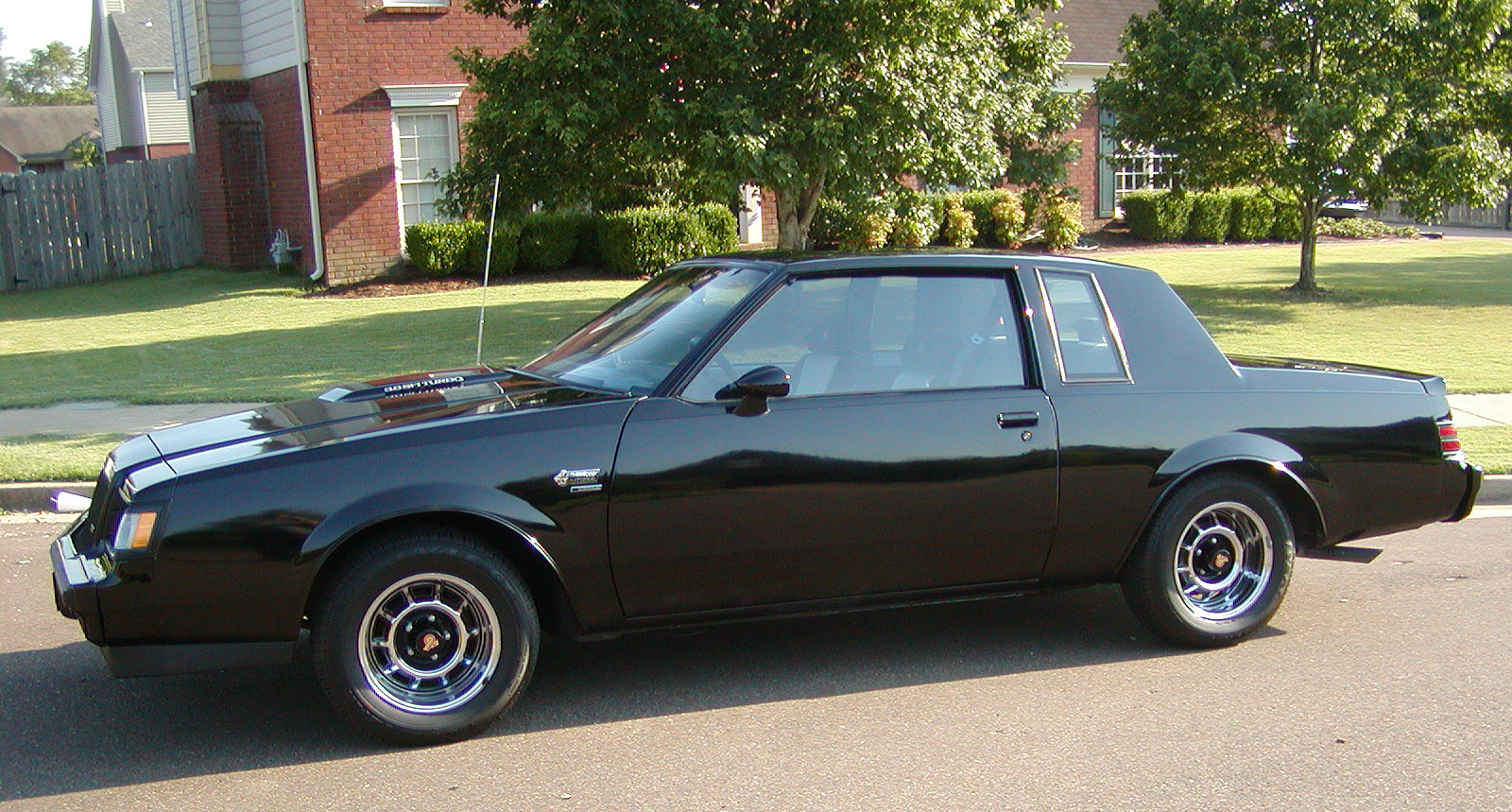
The Buick Grand National is the wonderfully improbable performance icon that proved a muted black coupe and a turbocharged V6 could be every bit as compelling as a traditional V8 muscle car.
Why the Grand National matters
By the early 1980s, American performance was rebuilding itself under new rules. Emissions requirements, fuel economy, and changing buyer expectations had made the old big-cube playbook difficult to repeat. Buick chose a different path. It developed the rear-wheel-drive Regal into a serious turbocharged car, combining the brand’s experience with forced induction and a package that looked almost anonymous from a distance.
The result became one of the defining American enthusiast cars of its decade. The Grand National was not delicate or exotic. It was a comfortable, upright coupe with an automatic transmission, a live rear axle, and the kind of interior shared with more ordinary Regals. That ordinary foundation is central to its appeal. The performance felt subversive because it arrived in a shape that did not advertise sophistication.
The model run in context
The Grand National name first appeared for 1982, tied to Buick’s success in NASCAR’s manufacturers championship. That first edition was visually and mechanically different from the later cars most collectors picture. The familiar all-black formula arrived after the name returned for 1984, now paired with sequential electronic fuel injection and the turbocharged 3.8-liter V6.
The 1984 and 1985 cars established the modern Grand National identity. For 1986, an air-to-air intercooler and related changes gave the engine a major step forward in factory-rated output and real-world pace. The 1987 model carried the formula through its best-known and highest-volume year. For that reason, shoppers usually separate the early non-intercooled cars from the 1986–1987 intercooled cars rather than treating every model year as an entirely different vehicle.
What it is like
A good Grand National feels muscular in a distinctly turbo-era way. Below boost it behaves like a period personal-luxury coupe. As the turbo comes in, the car gathers speed with a broad surge rather than the crisp, high-revving response of a modern performance engine. The automatic transmission suits that delivery and helps keep the engine working in its strongest range.
The chassis is honest about its origins. Steering, brakes, body control, and tire technology all belong to the 1980s. That does not make the car disappointing, but it does define the experience. The Grand National is most convincing as a fast road car and cultural artifact, not as a substitute for a modern sports coupe. Its combination of straight-line pace, usable cabin space, and menacing restraint remains distinctive.
Important year differences
- 1982: The first Grand National is a separate early chapter, produced in small numbers and not yet using the later all-black turbo formula.
- 1984–1985: The black appearance and sequential fuel injection are in place, but these cars use the earlier non-intercooled arrangement.
- 1986: The intercooled setup arrives, making this the first of the two years most buyers target for the mature package.
- 1987: The final and most numerous Grand National year. Availability, familiarity, and the breadth of surviving examples make it the usual entry point.
Notable variants
The 1987 GNX deserves its own place in the story. Developed with ASC/McLaren, it was a limited-production evolution with meaningful changes beyond badges and trim. Its rarity, performance reputation, and visual details put it in a different price category from a standard Grand National. The turbocharged Regal family also includes the T-Type and later Turbo T, which can offer closely related performance in a less obvious package.
What to look for when buying
Condition and documentation matter more than a single headline number. These cars became modification favorites, so determine whether an example is stock, thoughtfully upgraded, or returned to standard after harder use. Modifications are not automatically negative, but the quality of the work and the seller’s records should match the claims.
Inspect the body carefully for corrosion, previous collision repair, weathered seals, and aging paint or trim. T-top cars deserve close attention around the roof openings and interior for evidence of leaks. Inside, check the condition and operation of the instruments, power accessories, headliner, upholstery, and air conditioning. Original cosmetic pieces can be expensive or time-consuming to source.
On a test drive, look for clean cold starting, stable temperature, controlled boost, and a transmission that shifts consistently. Listen for detonation or unusual turbo noise and investigate smoke rather than explaining it away. Verify that the fuel and engine-management systems are appropriate for any power upgrades. The rear axle, suspension bushings, brakes, steering components, and body mounts should also be evaluated as parts of a complete 1980s chassis, not merely as supporting hardware for the engine.
Who should own one
The Grand National suits an enthusiast who values story and character as much as outright numbers. It is usable enough for weekend driving, supported by a knowledgeable community, and instantly recognizable without being flamboyant. Buyers expecting modern precision will find the car’s period limitations. Buyers who enjoy the sensation of a once-ordinary platform transformed into something unlikely may find exactly the point.
Currently available Buick Grand Nationals
Inventory below is rendered from CarBuy’s normalized local listing records. Source APIs refresh on a schedule, so a page view never triggers a marketplace request.